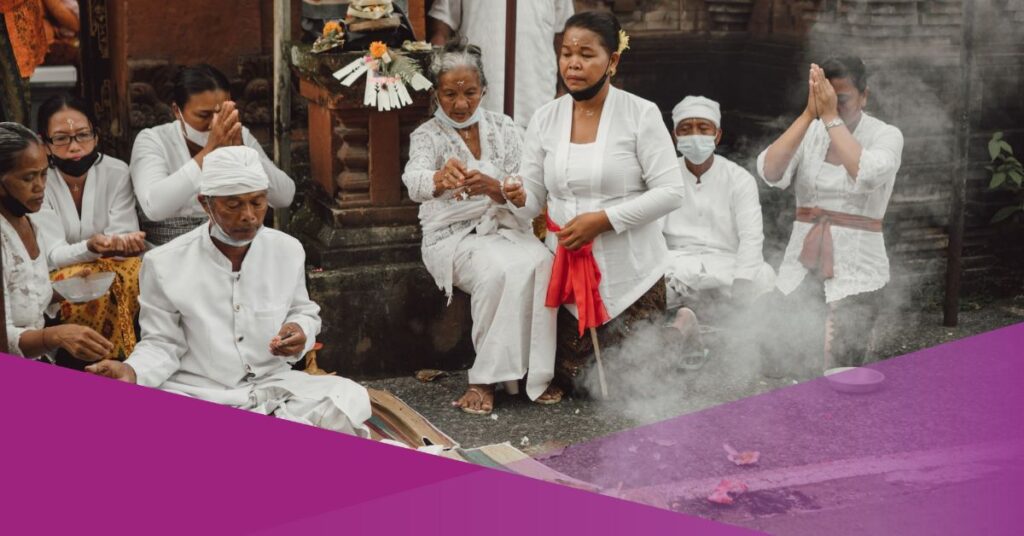
Bali, an Indonesian island known for its stunning beaches, lush tropical landscapes, and rich cultural heritage, is home to a diverse array of traditional ceremonies. These ceremonies, steeped in ritual and symbolism, serve as an integral part of daily life and provide a glimpse into the deeply ingrained spirituality that pervades the island.
From the offerings and prayers made at the family temple to grand processions celebrating important festivals, Bali’s cultural ceremonies are a vibrant display of the island’s unique blend of Hindu and indigenous beliefs.
Whether you are a resident or a visitor, experiencing the island’s cultural ceremonies is a must-do for anyone looking to immerse themselves in the rich history and traditions of Bali. Here are some of them:
Nyepi Ceremonies
Nyepi is a Hindu festival celebrated in Bali, Indonesia, and is regarded as one of the most important ceremonies on the island. It is a day of silence, fasting, and reflection that occurs on the eve of the Hindu New Year.
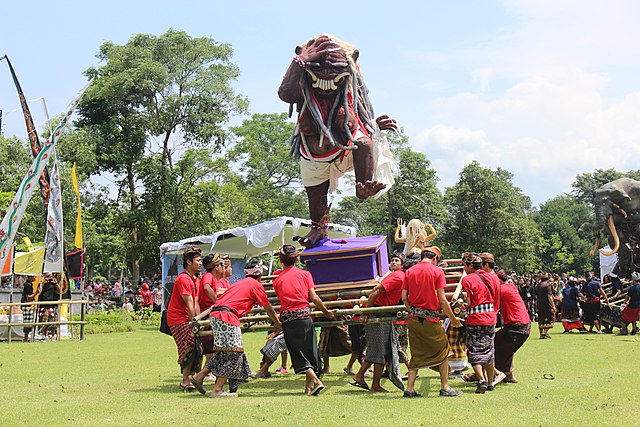
During Nyepi, Bali’s streets are deserted as the island comes to a complete halt for 24 hours. The celebrations begin with the construction of “ogoh-ogoh,” large, colourful, and often terrifying effigies that represent the evil spirits and negative elements of the previous year.
These effigies are paraded through the streets on Nyepi day before being burned, symbolising the release of negativity and the purification of the island. During the day, the Balinese observe a strict fast and stay at home with their lights turned off, with no work or entertainment permitted.
The goal of Nyepi is to cleanse the island while also providing a space for reflection and self-examination. It is a time for the Balinese to seek inner peace and begin the new year with a clean slate. Overall, the Nyepi ceremony is a fascinating and one-of-a-kind event that highlights Bali’s rich cultural heritage and spirituality.
Galungan and Kuningan
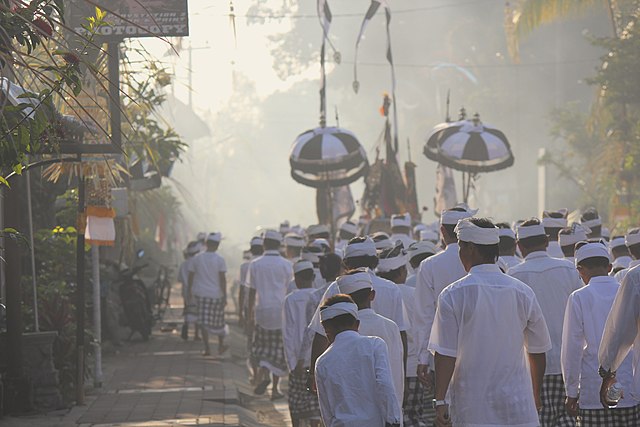
Galungan and Kuningan are two important Hindu festivals held on the Indonesian island of Bali. Every 210 days, the festival of Galungan is observed to mark the victory of dharma (virtue) over adharma (evil). Balinese streets are decked out with intricate bamboo poles and vibrant decorations during the 10-day festival, which is a time of thanksgiving and spiritual renewal.
Kuningan is the festival’s final day and a time to remember and honour one’s ancestors. It is believed that ancestors’ spirits return to Earth, and families make offerings and hold ceremonies to welcome them.
Galungan and Kuningan are important times for families to get together and strengthen the community bond. Visitors have the chance to learn about the spiritual beliefs and rich cultural heritage of the Balinese people through these ceremonies. They offer a fascinating look into Bali’s daily traditions and customs.
Saraswati Day
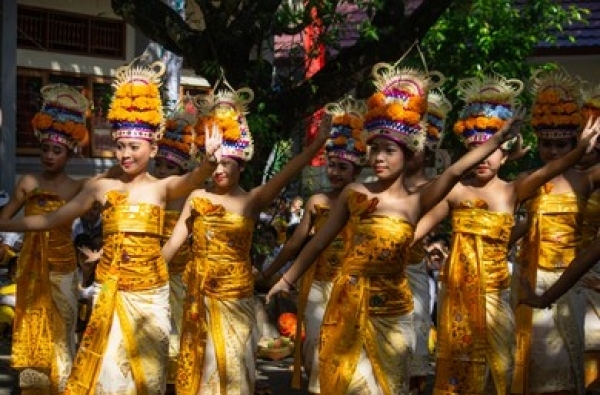
Saraswati Day is a Hindu festival celebrated in Bali, Indonesia, honouring Saraswati, the goddess of knowledge and wisdom. It is a significant event for students, teachers, and scholars and is usually celebrated in January or February. Offerings and prayers are made at local temples and schools on this day, and traditional dance and music performances are held.
During the Saraswati Day ceremony, Balinese people visit their local temples to make offerings and pray for the goddess’s blessings on knowledge and wisdom. Flowers, food, and traditional cakes are commonly used as offerings, which are placed on beautifully decorated altars in honour of the goddess. Students and teachers in schools also make offerings and participate in special ceremonies, such as reciting prayers and dancing.
Saraswati Day is both a religious and a cultural celebration. It is a time for families and communities to gather, participate in cultural activities, and emphasise the value of education and knowledge. Visitors to Bali can witness the rich cultural heritage and spiritual beliefs of the Balinese people during the Saraswati Day ceremony.
Pagerwesi Day
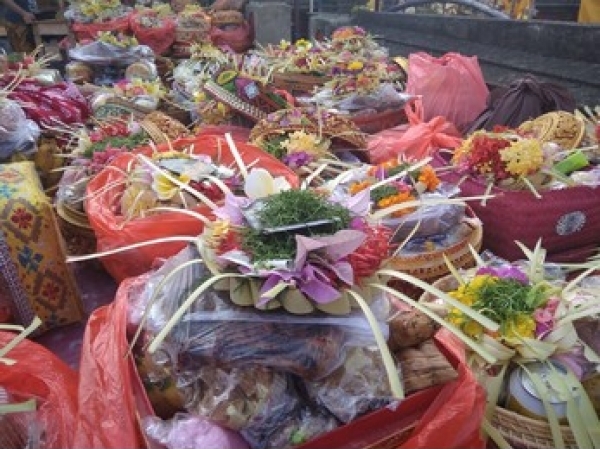
Pagerwesi is a Hindu festival celebrated in Bali, Indonesia, that honours the island’s protective spirits and gods. It is celebrated on the Wednesday (Buda) of the Balinese week, 11 days after the Galungan festival. Pagerwesi is a time for the Balinese to seek protection and blessings from the protective spirits, as well as to strengthen the community’s spiritual balance.
Offerings and prayers are made at local temples and homes during Pagerwesi, and special ceremonies are held to seek protection from the gods. Food, flowers, and traditional cakes are commonly used as offerings, which are placed on beautifully decorated altars. The ceremonies, which are accompanied by traditional music and dances, are a time for families and communities to come together.
Pagerwesi is also a time for spiritual renewal and self-reflection. It is a day for the Balinese to reflect on their behaviour and actions and to seek the gods’ blessings for a peaceful and protected life. This festival is not only a religious event but also a cultural celebration, and it offers visitors a unique opportunity to learn about the Balinese people’s rich cultural heritage and spiritual beliefs.
To learn more about Balinese or Indonesian culture in general, check out these articles below: