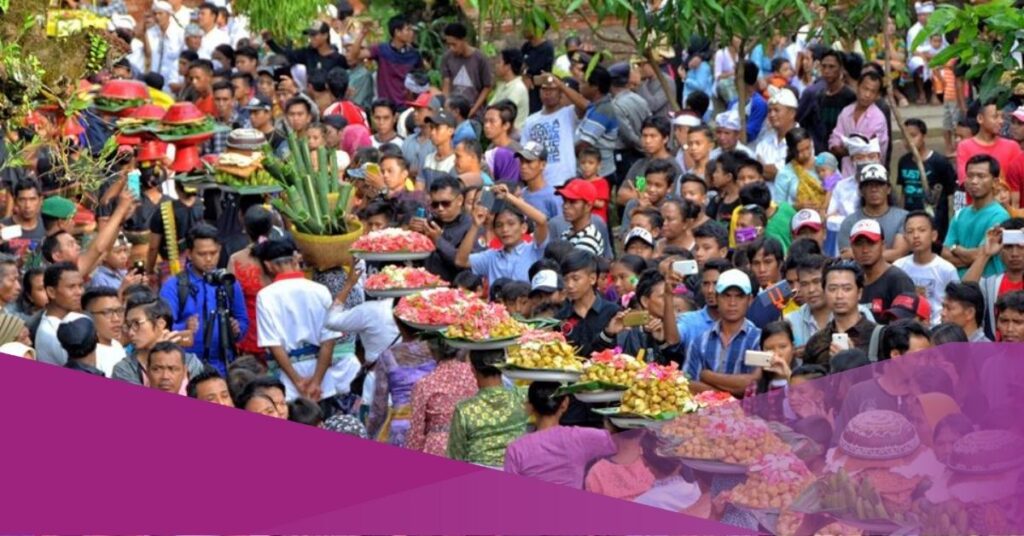
Eid al-Fitr, also known as Hari Raya Idul Fitri or Lebaran, is one of the most important religious holidays for Muslims around the world. Eid al-Fitr is celebrated with great enthusiasm and favour in Indonesia, the world’s largest Muslim-majority country. What distinguishes the Indonesian celebration of public holidays from others is its distinctive and colourful traditions, which are deeply rooted in the local culture.
Besides local common traditions to celebrate Eid Al-Fitr in Indonesia like mudik (homecoming), buying new clothes, giving gifts to older relatives, halal bi halal (gathering with friends and families), or visiting the graves of your deceased relatives, there are numerous fascinating ways in which Indonesians celebrate this festive occasion. In this article, we will look at some of the unique traditions with which Indonesian Muslims celebrate the holiday that begins in the tenth month of the Islamic calendar.
Grebeg Syawal
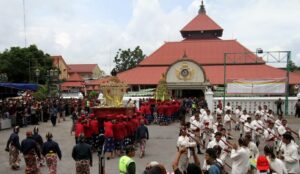
The Grebeg Syawal tradition is a ritual performed by the Yogyakarta Palace mosque on the first of Shawwal to commemorate Eid.
People gather to witness the Gunungan Lanang procession and prayers that will be held during the Grebeg Syawal celebration, beginning with the gunungan being brought out to the Grand Mosque of the Ngayogyakarta Palace to be prayed for.
Gunungan Lanang is made from vegetables, rice dishes, and other agricultural products that have been escorted by palace soldiers. Gunungan Lanang will eventually be taken over by the people. Some people believe that blessings from the mountains and peace bring them happiness. Usually, this tradition starts at around 10 a.m., Western Indonesian Time, after the Eid prayer.
Perang Topat
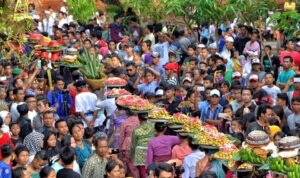
Lombok, which is predominantly Muslim, also has a distinctive tradition. This tradition is typically carried out by men and women on the sixth day of Eid.
Perang Topat tradition aims to strengthen Lombok’s inter-religious relations. The Sasak tribe, one of Lombok’s original tribes, has carried on this tradition for a long time. Residents will parade the produce before beginning the Topat War or Ketupat War celebrations.
Residents who participate in celebrations of this tradition believe that throwing ketupat means that all wishes and prayers will be granted soon by God.
Ronjok Sayak
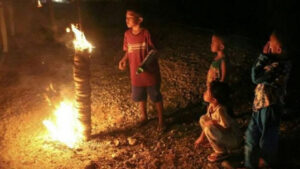
Ronjok Sayak is a tradition that originated in Bengkulu during the holy month of Ramadan and is still practised today. Residents of Bengkulu believe that fire connects humans to their ancestors. The Ronjok Sayak tradition is performed at takbiran on the night before Eid, specifically after the Isya prayer.
The Serawai tribe typically performs the Ronjok Sayak tradition. The Serawai tribe will construct tall coconut shells. The coconut shell arrangement will then be burned. This custom is performed in front of each resident’s home.
Batobo
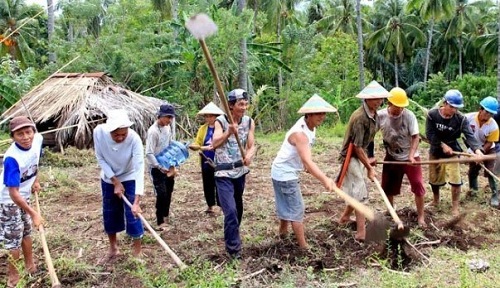
Homecoming or mudik is a well-known Eid tradition that should not be overlooked. In Riau, a tradition known as Batobo is held to welcome families returning to their hometowns. This hundreds-year-old holiday tradition is carried out by Kampar residents.
With the Batobo tradition, returning to your hometown will make the public holiday feel more meaningful. The parade will feature family and friends groups returning to their hometowns. The group will not only be paraded but will also be accompanied by tambourine beats. Families returning home at night are required to compete in recitation and Al-Quran reading competitions at mosques.
Ngejot
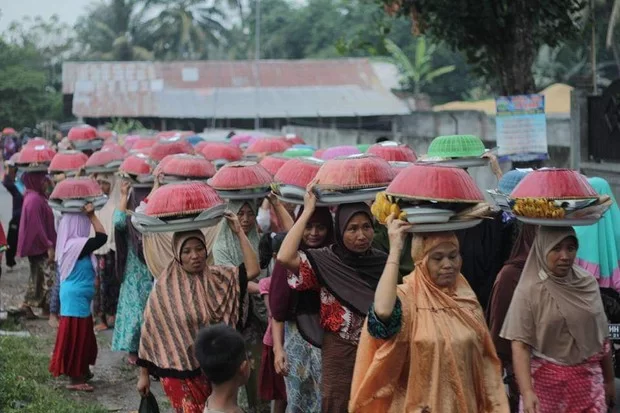
Ngejot is a Hindu ritual in which family members, friends and neighbours are given food as a gesture of gratitude, usually during times of celebration or public holiday.
Ngejot is primarily performed on the Indonesian island of Bali. The Balinese Hindu community follows the tradition. Ngejot is the Hindu term for Galungan and Nyepi. The tradition is observed by Muslims prior to Eid al-Fitr, the Muslim holiday commemorating the end of Ramadan. The Hindus provide food in the form of lawar, a pork dish from Indonesia.
In Indonesia, the ngejot tradition represents the inter-religious harmony and solidarity of Hindus and Muslims.
Curious about more unique traditions and social gatherings that frequently happen in every place in Indonesia? Check out the other articles from Social Expat!